+1 314-301-1504

[email protected]

Curriculum

Twelve weeks.
One continuous arc.

The curriculum is built around a clear progression. Each phase introduces new complexity while reinforcing what came before. The sequence is deliberate.
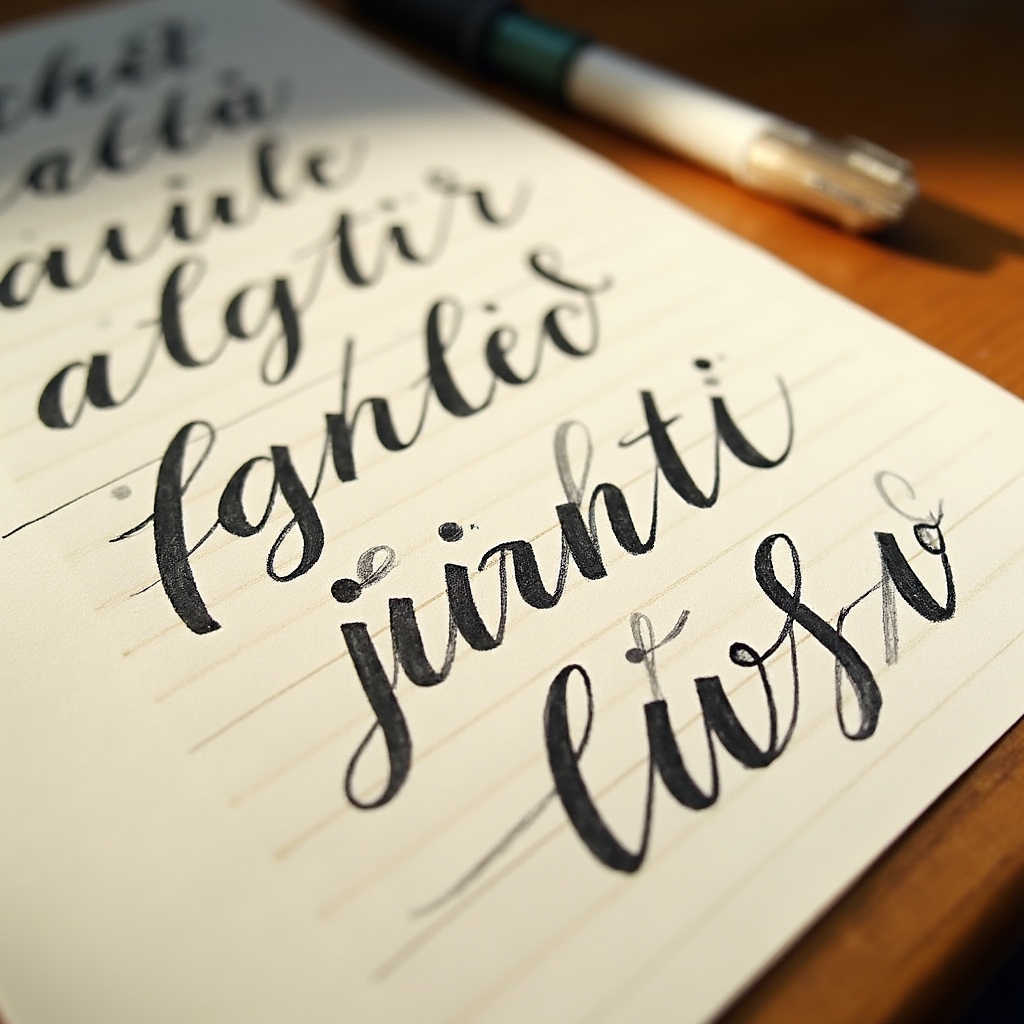
Alphabet practice sheet with brush calligraphy letterforms showing progression from basic to refined strokes
Program Structure

Three phases, twelve weeks

The 12-week program divides into three distinct phases. Each phase has its own character and purpose, but they are designed as a continuous arc rather than separate modules. Progress in the earlier phases directly shapes what becomes possible in the later ones.

Phase I
Weeks 1-4

Foundational Strokes

The first four weeks are devoted entirely to stroke mechanics. This is not introductory filler. It is the most important phase of the program. Students who rush past stroke fundamentals tend to develop inconsistencies that are difficult to correct later.

Grip and pressure mechanics Thin upstroke control Weighted downstrokes Oval construction Compound curve families Consistency across repetition
Phase II
Weeks 5-8

Letterform Construction

Strokes become letters. Letters become words. The second phase moves through the full alphabet, working with the stroke families established in Phase I. Spacing logic, connecting strokes and proportion receive sustained attention throughout.

Lowercase letterforms Uppercase construction Word spacing and rhythm Connecting stroke logic Proportion and x-height Consistency across a word
Phase III
Weeks 9-12

Composition and Personal Projects

The final phase shifts from technical instruction toward personal creative development. Students work on self-directed projects within a guided framework. Composition, layout, decorative elements and stylistic voice become the primary focus.

Layout and visual hierarchy Flourish and ornamentation Multi-line compositions Style development Personal project planning Final project presentation
Styles Covered

What you practice across the program

The curriculum covers multiple lettering styles, though not all in equal depth. The core program emphasizes brush calligraphy and hand lettering because these styles develop the most transferable foundational skills. Decorative typography and pointed pen work are introduced as students progress.

Students are not expected to master every style. The goal is to develop strong fundamentals that can be applied across styles, and to identify which styles resonate most with each student's creative sensibility.

Brush Calligraphy

Core focus throughout. Pressure-sensitive letterforms using brush pens and pointed brushes.

Hand Lettering

Introduced in Phase II. Drawn letterforms treated as individual illustrations rather than written script.

Decorative Typography

Explored in Phase III. Composition, ornament and the relationship between text and visual space.

Pointed Pen Scripts

Optional exploration for advanced students. Introduced as supplementary material in weeks 10-12.

Tools and Materials

What you will work with

The program uses a range of tools appropriate to each style and phase. Students receive a materials list before the first session. Most supplies are available locally in St. Louis.

Brush Pens

Both small-tip and large-tip brush pens are used throughout the program. Different tip sizes respond differently to pressure and produce distinct stroke characteristics.

Ink and Pointed Brushes

Traditional pointed brush work with liquid ink is introduced in the intermediate and advanced phases. The technique differs significantly from brush pen work.

Practice Paper

Specific paper types are recommended for different tools. Smooth marker paper for brush pens, layout paper for pencil construction work, and cartridge paper for ink practice.

Construction Tools

Pencils, rulers, light boxes and grid sheets are used in the hand lettering phases where letterforms are constructed before being inked.

Questions about the curriculum?

We are happy to discuss how the program might work for your current skill level and creative goals.